
Otto Kässi and Jaakko Kilpi
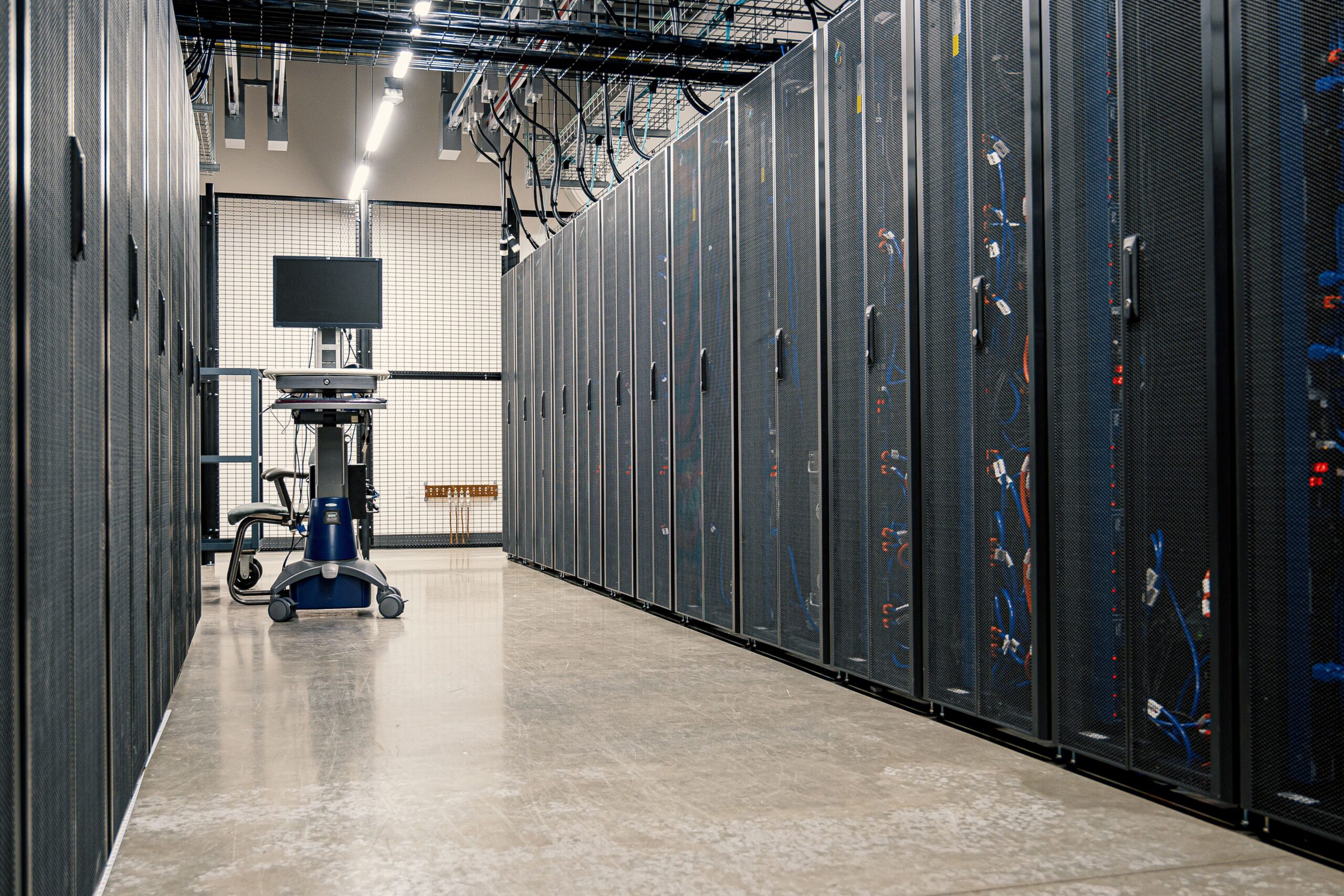
Finland is in the middle of a data centre boom (see our 2025 census). Many, including Mattila (2025), argue that cheap electricity is the main driver of the current data centre building surge. In this short analysis we argue that, while not meaningless, electricity bills are likely of second-order importance compared to grid access and speedy zoning.
According to Eurostat, a large industrial site such as a data centre paid about €50 per MWh of electricity (including taxes and levies) in Finland, the lowest price in Europe.
AI firms publish little of the data needed, so we approach this question as a chain of informed guesses from published benchmarks. Where the evidence leaves a choice, we try to pick the number that lowers the revenue estimate, which results in estimates that should err on the lower side.
We estimate that 1 MWh of electricity used for inference by a frontier AI lab brings in about $6,000 of revenue. We first go through the calculation step by step, then discuss what it implies.
(The calculation lies outside our core expertise, so we may well have made mistakes. We welcome all possible comments. Busy readers can skip straight to the implications.)
Calculation details start here.
Step 1: electricity per server-hour
NVIDIA (NVIDIA datasheet) reports that its DGX H100, a recent but not top-of-the-line AI server with eight H100 graphics processors (GPUs), has a maximum power of 10.2 kW. Like a car engine, the server does not run at full throttle all the time. The speed at which the GPUs read their memory limits how fast they generate text, so the chips spend some time waiting. One study (Oviedo et al., 2025) puts the average draw of a busy server at 70% of its maximum. One server-hour by a busy server thus uses 7.1 kWh of electricity.
The building around the servers also uses electricity, for example for cooling and lighting. The ratio of the building’s total electricity use to that of its servers is called power usage effectiveness (PUE). The same study gives a PUE range of 1.05–1.40 for large operators, with larger facilities usually reaching a PUE closer to 1. We assume a PUE of 1.2, so each kWh that the servers use needs an additional 0.2 kWh for non-compute use.
There is also a second type of overhead. A provider must own enough servers for the busiest hour of the day. Oviedo et al. assume that demand varies over the day, so that on average 75% of the servers are busy and 25% are idle. An idle server still draws 24% of its full power. Compared with the busy servers, the idle servers thus add (1-0.75) * 0.24 / 0.75 ≈ 8% to electricity use. Under the assumptions made in Oviedo et al., servers kept for failures and within-site networking add another 10% each. Together these give a factor of 1.08 * 1.10 * 1.10 ≈ 1.31. For each kWh that busy servers use, the provider uses 1.31 kWh before cooling.
Multiplying these through, one server-hour uses 10.2 kW * 1 hour * 0.7 * 1.2 * 1.31 ≈ 11.2 kWh of metered electricity.
Step 2: from one MWh to server-hours
Step 3: tokens per server-hour
Next, we need the number of tokens that a model produces in 89 server-hours. These numbers are proprietary information for the closed models such as ChatGPT and Claude. However, a recent benchmark based on a large open-weights model (Llama 3.1 405B) (again reported in Oviedo et al. (2025)) shows that NVIDIA DGX H100 processes 7,200 input tokens and produces 449 output tokens per second, or 25.9m input and 1.6m output tokens per server-hour.
Input and output tokens differ, and so do their prices. Each request to a large language model has input tokens (the prompt, attached documents, earlier conversation) and output tokens (the answer to the prompt). The ratio of input to output tokens varies by task (for example, coding requests are far more input-heavy than chat). The benchmark task discussed above – which assumes a typical chat LLM session – has 16 input tokens for every output token.
Step 4: from tokens to revenue
For prices we use OpenAI’s API list prices (as of early November 2026) for GPT-6.1 Sol: $2 per million input tokens and $10 per million output tokens (other mid-tier models from the frontier labs including Claude Sonnet 5.5 and Gemini 4 Argon are priced approximately the same).
Over the 89 server-hours, the server reads about 2.3bn input tokens and writes about 144m output tokens. The input tokens bring in about $4,610 and the output tokens about $1,440, so one MWh of electricity yields about $6,050 of revenue at list prices.
List prices overstate what a provider earns per token on average, because subscriptions, free use and enterprise discounts all pull the average price down. If we assume, however, that all compute is sold at list prices, revenue is about 100 times the cost of electricity.
The Oviedo benchmark we use has no cached token inputs. AI model providers usually store the recently processed portion of the conversation and reuse it in the next request. Cached tokens skip most of the computation, which is also reflected by the fact that they are billed at about a tenth of a normal input price. Input tokens are also cheaper than output tokens. Each cached input token therefore frees server time for writing higher priced output tokens. Disregarding cached inputs therefore likely biases our estimates downwards.
Step 5: annual revenue
A modern AI data centre has perhaps a 300 MW grid connection. We assume that the site would draw the full 300 MW if all its servers ran at maximum power. Using the power share, the average load and the idle draw from step 1, the site then draws on average about 300 MW * 0.7 * 0.75 * 1.08 ≈ 170 MW in total. Over a year of 8,760 hours, this comes to 170 MW * 8,760 h * $6,050 per MWh ≈ $9.0bn.
Under these assumptions, a typical AI data centre can generate billions of dollars in revenue a year. Much of this revenue pays for chips and training of new and more advanced models. Model providers also often rent computing capacity from data centre operators, and how the two share the revenue is unclear. Still, the calculation shows why the economics of serving AI models are very attractive for the AI labs.
Calculation details end here.
Implications
In summary, our back-of-the-envelope calculation suggests that a MWh of electricity can generate about $6,000 in revenue for an AI lab, or billions of dollars a year for a large data centre. Some AI model providers operate their own data centres, but others rent compute capacity from data centre operators, who then receive only a part of this revenue as rent.
This has a few implications.
- The electricity, at €40–50, is about 1% of the revenue it helps generate. Even if electricity cost three or four times as much, it would still be a small share of revenue. Cheap electricity is therefore welcome but of secondary importance to model providers. Places where electricity costs much more than in northern Europe are also having a data centre boom (e.g., Germany, Texas and Virginia, and the FLAP-D hubs of Frankfurt, London, Amsterdam, Paris and Dublin). Given the revenue margins over electricity, it is also unlikely that the data centre electricity tax hike that took place in July 2026 deterred many operators from entering, despite industry warnings.
- Construction time matters a great deal. Under our assumptions, each month of delay costs about $750m in lost revenue to the AI lab. Therefore, having quickly available electricity, grid connections and speedy zoning decisions is of very high value.
- Since both the AI labs and data centre operators are largely foreign-owned, a large share of the profits are likely reported and taxed outside of Finland. Finland can still capture a part of the value through the scarce input it controls, namely grid connections. Since electricity costs are a minimal share of the total revenue, and delays are expensive, data centre operators would likely be willing to pay for grid connections. If a share of grid connections were auctioned instead of allocated by a queue-and-wait system, this could raise considerable revenue. For the same reason, building permits for data centres could require investment in the local grid or in electricity generation.
- The unit economics of frontier AI labs are largely invisible to the public, but also to regulators and investors. In this post, we have relied on substantial guesswork to rebuild them. However, Anthropic’s IPO prospectus gives support to our finding that serving existing AI models has very good margins. The total cost of serving customers, of which electricity is a minor part, is about 15% of Anthropic’s revenue. (According to the prospectus, Anthropic’s revenue for the first 9 months of 2026 was $33,242m, while cost of generating this revenue was $4,812m, implying an 85% gross margin. At the same time, Anthropic also spends most of its revenue on training new models, and has committed to paying close to $900bn in compute over the next two decades. So serving the current models seems profitable, but it is unclear whether Anthropic can find demand for all the compute it has committed to buy in the future.)
- Given the growing importance of frontier AI labs to both the economy in general and to electricity markets in particular, greater transparency about their electricity consumption and revenue per token would be valuable for public policy. This information would help the public assess the economic value generated by AI-related electricity use and make more informed decisions about energy infrastructure and industrial policy.